Oxford vs ripstop fabric for workwear and utility products: what should buyers compare?
Neither “Oxford” nor “ripstop” is a durability result. Buyers should compare the actual product code, yarn specification, fiber blend, GSM, finish, physical sample and the test methods linked to the intended product.
Oxford usually refers to a basket-weave family; ripstop refers to a reinforced grid construction. Supplier naming can vary, so the physical swatch and specification must control the review.
Do not infer performance
A 300D yarn description, a visible grid or a higher GSM does not by itself prove abrasion, tensile, tear, puncture or after-wash performance.
Start from the finished use
Define garment or utility-product geometry, load points, movement, exposure, seam route, cleaning and target test methods before selecting the first sample.
Two current catalog references
These images and specifications are current catalog starting points, not a claim that the two fabrics are interchangeable or approved for every finished product.
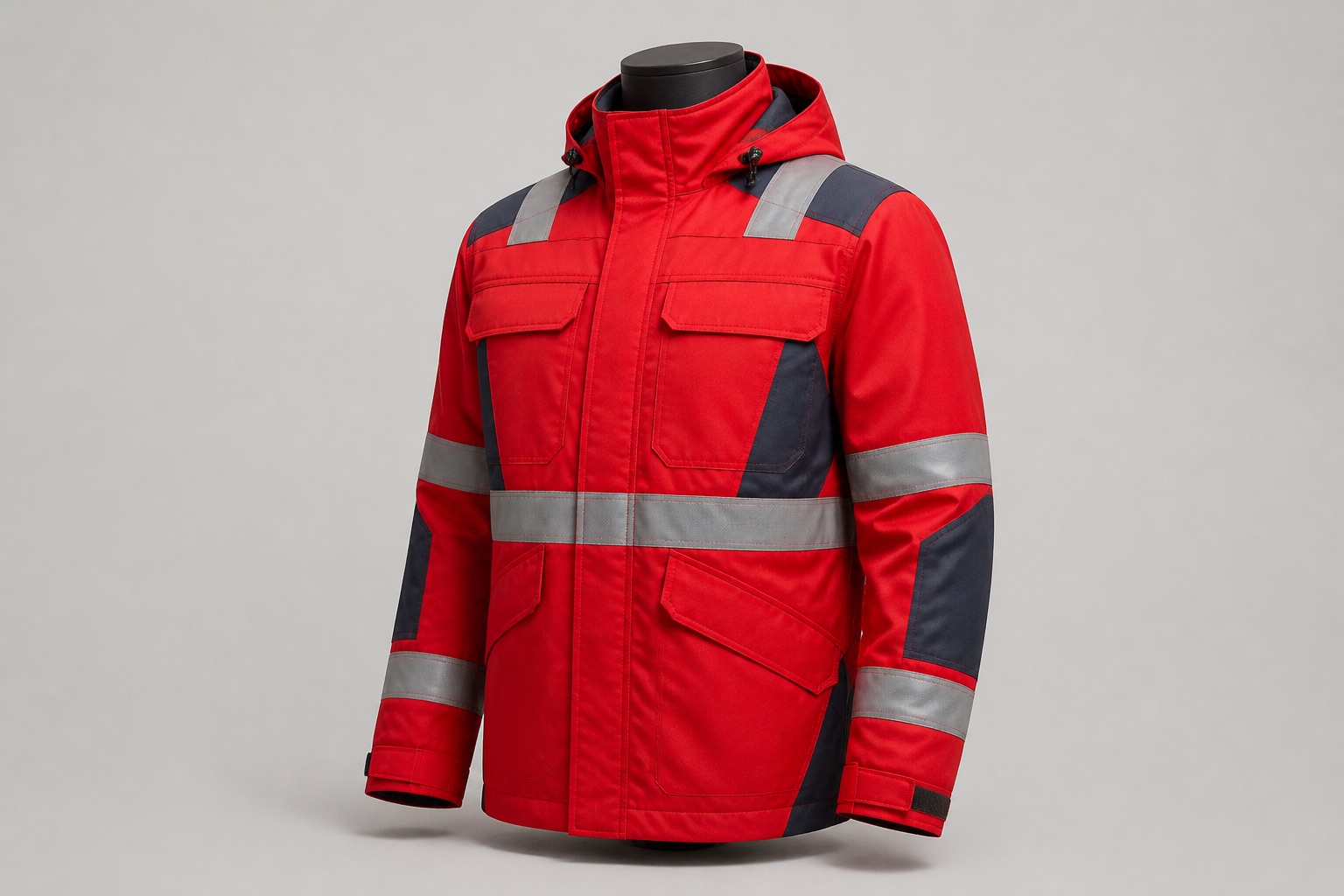
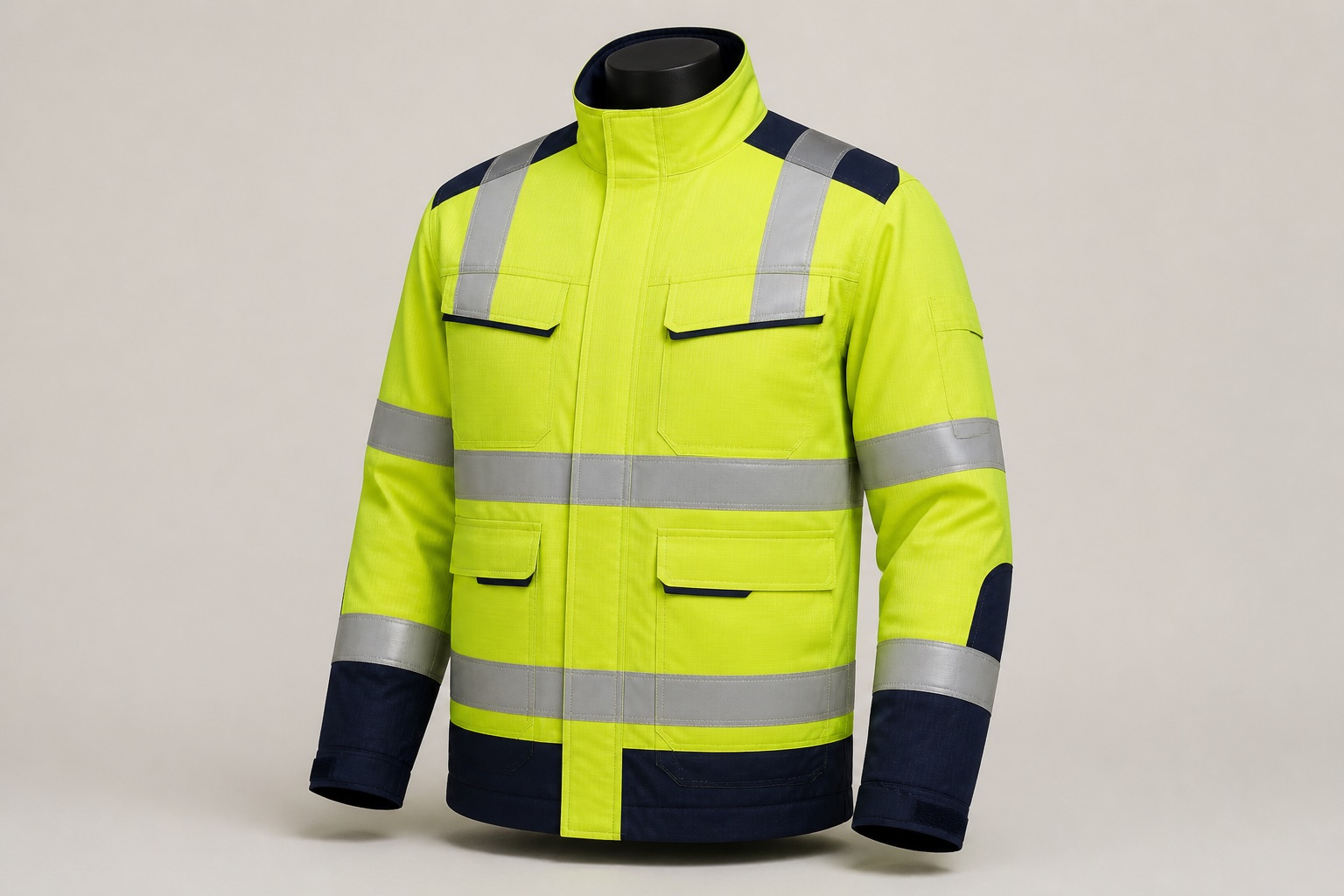
HM028 Oxford routeCurrent record: 100% polyester, 300D × 300D, 150G, high-visibility red. Use the physical sample to review structure, hand feel, finish and product-specific test needs.HM024 TC ripstop routeCurrent record: 80% polyester / 20% cotton, 150D × 21S + 10S TC, 220G, high-visibility yellow. The grid construction does not replace tear, seam or garment testing.
300D and “Oxford” do not prove a finished product’s durability.
“Ripstop” does not mean that a tear cannot start or propagate.
Technical questions that matter more than the name
Yarn and directional structure
Record warp and weft yarns, density or construction reference, reinforcement pattern and fabric direction. Results may differ by test direction.
Finish and assembly
Coating, water-repellent treatment, lamination, sewing, welding, seam allowance and reinforcement can change how a complete item performs.
Use and maintenance
Define abrasion surfaces, flexing, load, UV or weather exposure, cleaning chemistry, laundering cycles and storage before fixing acceptance criteria.
Sample and test plan
State the finished product, target market, dimensions, load points, movement and service environment.
Review the current swatch card, composition, yarn specification, GSM, color, finish and usable width together.
Choose named test methods and specimen directions for the actual risk: abrasion, tensile, tear, puncture, colorfastness, shrinkage or weather exposure as applicable.
Review seams, reinforcement, closures and other assembly details separately from fabric-side evidence.
Approve a traceable physical sample and define bulk-lot tolerances before production.
FAQ
Is Oxford fabric stronger than ripstop fabric?
Not as a general rule. “Oxford” and “ripstop” describe construction routes, while strength depends on the actual yarns, density, fiber blend, finish, test method and specimen direction.
Does 300D automatically mean better durability?
No. Denier describes linear yarn mass. It does not by itself establish abrasion, tear, puncture, seam or finished-product durability.
Does ripstop fabric prevent tearing?
No. A reinforced grid may be part of the tear-control design, but the actual fabric still requires relevant directional testing and finished-product review.
Can HM024 and HM028 be substituted directly?
No. Their composition, yarn specification, GSM, construction route and color differ. Treat them as separate starting references and approve the route against the project brief.
Turn the comparison into an actionable sample request
Send the intended product, dimensions, use environment, quantity, color, finish, test methods and whether HM024 or HM028 is the closer starting reference.